The Consultation Is Not a Vote
Public consultation invites views but does not itself decide an outcome. Learn how to read the process, make a focused response and understand what follows.

The common mistake with public consultation is to treat a request for comments as a ballot. The cost is misplaced expectation: residents may assume their preferred option must win, then feel misled when the proposal changes—or does not—after the responses are considered.
A consultation gathers views and information to inform a choice. Unless the process is expressly set up under rules that give a vote or ballot a defined effect, a preference question, tick boxes or a show of hands do not make it binding. The practical question is what the notice says remains open and how responses will be used.
What is public consultation asking you to contribute?
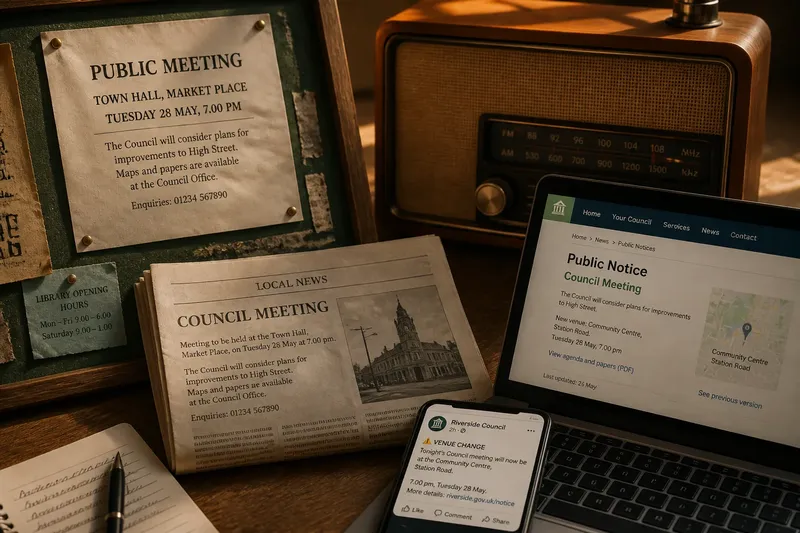
A public body may invite comments on a draft policy, service change, plan or set of alternatives. It might use an online form, a public meeting, written submissions, a survey or a display at a library. The format determines how you can respond, not what effect your response has.
Read the questions closely. “Which option do you prefer?” asks for a preference; “What effects have we missed?” seeks information about consequences; “Do you support this proposal?” asks for a view on the proposal as presented. A useful response addresses the question while adding relevant detail the decision-maker can assess.
How can public consultation influence a decision?
Comments can identify an overlooked effect, clarify how a service is used, expose an assumption or suggest a workable alternative. The body considering the proposal may then revise it, seek more information, delay a choice or explain why it will proceed without adopting a suggestion. The value lies in contributing relevant reasons and evidence, not simply registering a preference.
Say you receive an invented consultation notice about proposed changes to a local library’s opening hours. The stated options are to close earlier on weekdays or reduce Saturday hours, and the notice asks about effects on library users. You use the online form to explain that a community group relies on an after-work session, identify the weekday slot it uses and suggest keeping that session while reducing another period. The resulting response gives the body a specific impact and an alternative to consider; it does not establish that the group’s preferred schedule will be chosen.
What should you check in a consultation notice?
Use the notice to work out what is open for comment and what response would be relevant. For each item below, check the stated information and follow the decision indicated; if it is missing or unclear, ask the body running the consultation rather than assuming an answer.
- Purpose: Check whether the body seeks views on a draft, a choice between options or information about a problem. If the purpose is clear, address that question; if it is vague, ask what the responses are intended to inform.
- Decision-maker: Check whether the notice identifies who will consider the outcome. If it names a committee, officer or authority, direct your response to the decision described; if it does not, ask who will receive the findings.
- Scope: Check which parts of the proposal can still change. If a relevant part is open, explain your concern or alternative; if it is fixed, focus on an open issue or ask whether the stated scope can be clarified.
- Use of responses: Check whether the notice explains how comments will be considered or reported. If it does, shape your response to the stated process; if it does not, ask how the body will use the information.
- Timing: Check the response deadline and any stated next stage. If the deadline is clear, submit through the named channel in time; if the next stage is missing, ask when and where an outcome will be made public.
- Response format: Check for a word limit, required questions or supporting material. If the form sets requirements, follow them and prioritise your strongest relevant point; if it does not accommodate your evidence, ask how to provide it.
How can you make a response more useful?
State the part of the proposal you are addressing, give your reason and describe a consequence the body can assess. If you favour an alternative, explain what problem it solves and any trade-off it creates. Specific observations are easier to consider than a general statement of support or opposition.
Use the stated channel and meet the deadline. If a form does not fit your experience, explain what information is missing and ask whether another format is available. You do not need to claim certainty: distinguish what you have observed from what you think may happen.
What do people ask about public consultation?
Does the most popular option have to win?
Not unless the process gives the vote or ballot that effect under its stated rules. A consultation may report preferences, while the decision-maker considers the reasons and other relevant factors.
Can a consultation be binding?
A process may assign a defined role to a vote or ballot, but an invitation to comment alone does not establish one. Check the published rules and process wording, and seek clarification from the responsible body if they are unclear.
Does a public meeting decide the issue?
A meeting might gather views, answer questions or provide a setting for an authorised decision. Check its stated purpose before treating attendance or a show of hands as a decision.
What can you do if a response seems overlooked?
Read the published account to see whether it addresses the issue you raised. If a material point appears absent, or the process seems inconsistent with its stated rules, ask the responsible body how to raise the concern through its usual channels.
What should you look for after responses close?
Closing the response period does not by itself tell you when a choice will be made. Check the notice for the next stage, then look for an account explaining how the views informed the outcome. It may describe themes raised, changes made and reasons for not adopting other suggestions.
If the outcome or its timing is unclear, ask where the result will be published. A consultation summary may explain the responses, while a later announcement may state the choice; look for the account that connects the views to the decision rather than relying on a simple count of preferences.
For public consultation, the most useful starting point is to identify what remains open and what kind of information the process seeks. That lets you make a focused contribution and judge the outcome against the process the notice actually described.